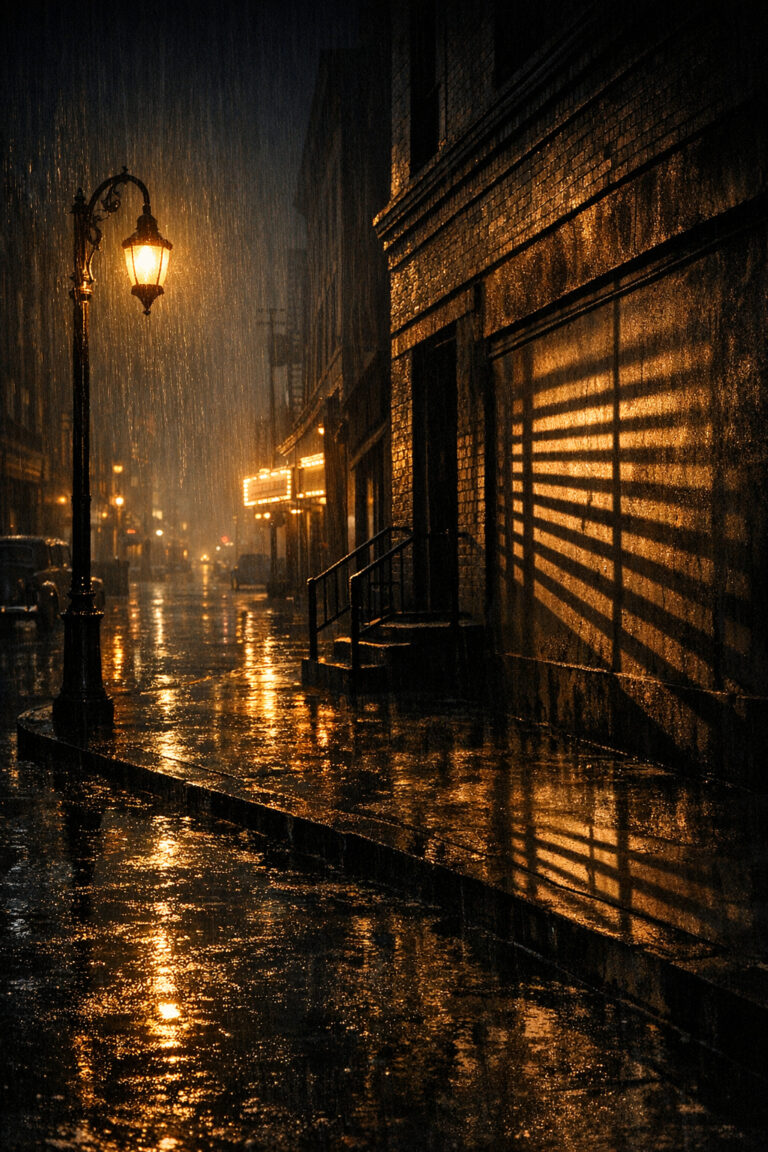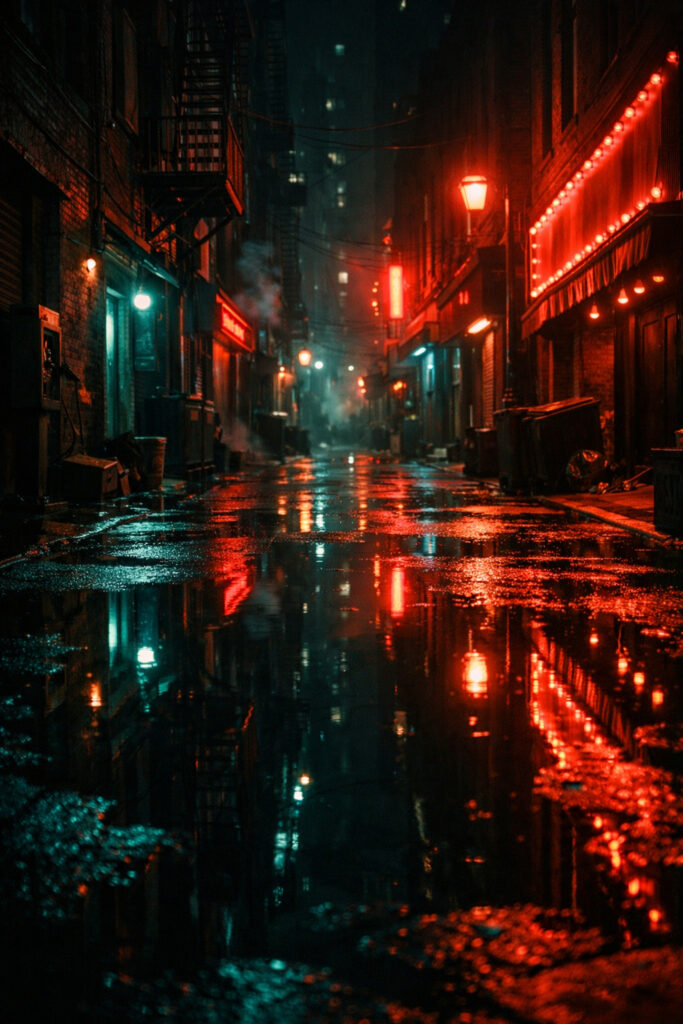
Near the end of Chinatown (1974), a private detective stands in a street at night, having failed at almost everything he tried to do, and a colleague tells him, “Forget it, Jake. It’s Chinatown.” The scene has all the elements of a 1940s crime picture: the compromised investigator, the corrupt rich man, the woman who could not be saved. But it is in color, it was made in the 1970s, and it knows exactly which tradition it is joining. That self-awareness is the heart of neo noir, the long afterlife of a style that supposedly ended in 1958.
What neo noir means
“Neo-noir” simply means new noir: crime films made after the classic period that consciously draw on its themes, characters and visual language. The classic cycle, discussed in my piece on what film noir is, was largely named after the fact. The people who made Double Indemnity did not think of themselves as noir directors. Neo-noir filmmakers usually did. They had seen the old films, often had read the French and American criticism about them, and were working with the tradition deliberately, whether to honor it, update it or pick it apart.
That difference in awareness is the most useful way to tell the two apart. A classic noir is an expression of its own moment, shaped by the war, the Production Code and studio economics. A neo-noir is in conversation with those earlier films.
The bridge: the 1960s
When the classic cycle wound down, the first people to keep it alive were European. The young critics of the French New Wave loved American B-movies, and their early features show it. Jean-Luc Godard’s Breathless (1960) is dedicated to Monogram Pictures, one of the poverty-row studios behind cheap crime films, and its small-time hoodlum models himself on Humphrey Bogart. François Truffaut adapted the American crime novelist David Goodis in Shoot the Piano Player (1960). Jean-Pierre Melville, slightly older, made cool, stripped-down gangster films such as Le Samouraï (1967), with Alain Delon as a silent contract killer.
In Hollywood, John Boorman’s Point Blank (1967) took a hardboiled novel by Richard Stark (a pen name of Donald E. Westlake) and turned it into something fractured and modernist, with Lee Marvin as a robber pursuing a debt through a cold landscape of concrete and glass. It is in color, it plays with time and memory, and it feels like a bridge to the decade that followed.
The 1970s revival
The 1970s were the richest period for neo noir, and not by accident. The Production Code had been replaced by the ratings system in 1968, so films could show violence and moral ambiguity more openly. The country’s mood after Vietnam and Watergate suited stories in which institutions are rotten. And a generation of directors who had grown up watching the classics was now in charge.
Revisiting the private eye
Several films took the detective of the 1940s and set him loose in a changed world. Robert Altman’s The Long Goodbye (1973) puts Raymond Chandler’s Philip Marlowe, played by Elliott Gould, in 1970s Los Angeles, where his old-fashioned loyalty looks almost absurd. Leigh Brackett, who had co-written the screenplay of The Big Sleep in 1946, wrote this one too. Arthur Penn’s Night Moves (1975) gives Gene Hackman a case he cannot quite see clearly. And Farewell, My Lovely (1975), directed by Dick Richards, cast Robert Mitchum as Marlowe in a more traditional period version.
Chinatown
Roman Polanski’s film, written by Robert Towne, is set in 1937 Los Angeles and built around a scheme over the city’s water supply. Jack Nicholson plays the detective, Faye Dunaway the mysterious widow, and John Huston, who directed The Maltese Falcon, plays the powerful man at the center of it. Towne’s screenplay won the Academy Award. It is a period piece that uses the old conventions to say something darker than the old films could: here the detective’s interventions make things worse.
The noir mood without the trench coat
Other films kept the atmosphere and dropped the period trappings. Alan J. Pakula’s Klute (1971) is a paranoid thriller about surveillance. Martin Scorsese’s Taxi Driver (1976), written by Paul Schrader, the same writer whose 1972 essay helped introduce noir to American criticism, is a portrait of a lonely man in a nighttime city.
How neo noir differs from the classic period
| Aspect | Classic noir (c. 1940-1958) | Neo-noir (1960s onward) |
|---|---|---|
| Awareness | Named afterward by critics | Made knowingly within a tradition |
| Image | Black and white, low-key lighting | Mostly color; shadows, neon and saturated hues |
| Censorship | Production Code: crime must be punished | Ratings era: endings can be bleak or open |
| Violence and sexuality | Implied, kept off screen | Shown more explicitly |
| Endings | Wrongdoers usually caught or killed | Villains may win; heroes may fail |
| Settings | Contemporary cities of the 1940s and 50s | Period recreations, modern cities, even the future |
Color is the most obvious shift, and it forced cinematographers to rethink the style. Some neo-noirs imitate black-and-white contrast through deep shadow; others replace it with neon, sodium-vapor orange and nighttime reflections. The classic look, described in my piece on film noir lighting, became something to reinterpret rather than reproduce.
The Production Code change matters just as much. Classic noirs often had a final-reel punishment imposed by the rules. Neo-noirs can let a guilty character walk away, which makes them, in some ways, more cynical than the films they admire.
The 1980s and 1990s
Lawrence Kasdan’s Body Heat (1981) openly reworks the Double Indemnity pattern in a humid Florida town, with Kathleen Turner, in her film debut, and William Hurt. Remakes appeared too: The Postman Always Rings Twice (1981) and Against All Odds (1984), a remake of Out of the Past. Ridley Scott’s Blade Runner (1982) carried noir into science fiction, with a hardboiled hunter and rain-soaked streets; its original theatrical version even used a detective-style voice-over.
The independent scene took noir in its own directions. Joel and Ethan Coen’s first feature, Blood Simple (1984), is a tale of murder and misunderstanding in Texas. David Lynch’s Blue Velvet (1986) found noir underneath a sunny small town. Stephen Frears’s The Grifters (1990) adapted the novelist Jim Thompson. Carl Franklin’s Devil in a Blue Dress (1995), from Walter Mosley’s novel, set a Black private detective in 1948 Los Angeles and showed a side of the city the classic films had largely ignored. Curtis Hanson’s L.A. Confidential (1997), from James Ellroy’s novel, is a sprawling 1950s police-corruption story; it won Academy Awards for its adapted screenplay and for Kim Basinger’s supporting performance.
Into the 21st century
Christopher Nolan’s Memento (2000) turned the noir flashback into a puzzle told partly in reverse. Nicolas Winding Refn’s Drive (2011) used a nearly wordless driver, neon-lit Los Angeles and a synthesizer score. By now neo-noir is less a movement than a permanent option, a set of tools that filmmakers in many countries can pick up for crime stories, thrillers and even science fiction.
Is it neo-noir or just a crime film?
Because the label is applied so freely, it helps to have a few questions to ask. Not every thriller with a detective or a murder qualifies, and plenty of films that are not crime stories at all borrow the mood. When I am deciding whether a film belongs, I look for several of these traits rather than any single one:
- A protagonist in over his or her head. Someone who believes they understand the situation and is wrong, often fatally.
- Institutions that cannot be trusted. Police, businesses, families or governments that are part of the problem.
- A past that will not stay buried. Old crimes, old loves or old debts that return to shape the present.
- Night and the city. Not always literally, but a sense that the characters live where daylight does not reach.
- Deliberate echoes. Voice-over, flashback, femme fatale figures or visual quotations from the 1940s, used knowingly.
That last point is often what separates neo-noir from an ordinary crime picture. A heist film can be tense and stylish without engaging the tradition at all. A neo-noir usually wants you to notice its ancestors. Sometimes that takes the form of loving pastiche, as in a period film set in 1940s or 1950s Los Angeles. Sometimes it is critical, using the old conventions to question them, as when a film turns the femme fatale into a fuller character or lets the detective’s code lead him nowhere.
There is also a gray zone. Late classic films such as Touch of Evil are sometimes described as transitional, already looking back at noir while still belonging to it. The labels are tools for watching, not rules, and arguing about them is half the fun.
Where to start
If you are new to neo noir, I suggest a short sequence: Point Blank, Chinatown, The Long Goodbye, Body Heat, Blood Simple and L.A. Confidential. Pair each with a classic from the 1940s and the conversation between them becomes clear. Body Heat plays very differently after Double Indemnity, and The Long Goodbye makes more sense once you know The Big Sleep.
Where to go next
Find the classic films these directors were responding to in the best film noir movies, or read about the novelists who supplied many of their stories in from hardboiled novel to film noir.