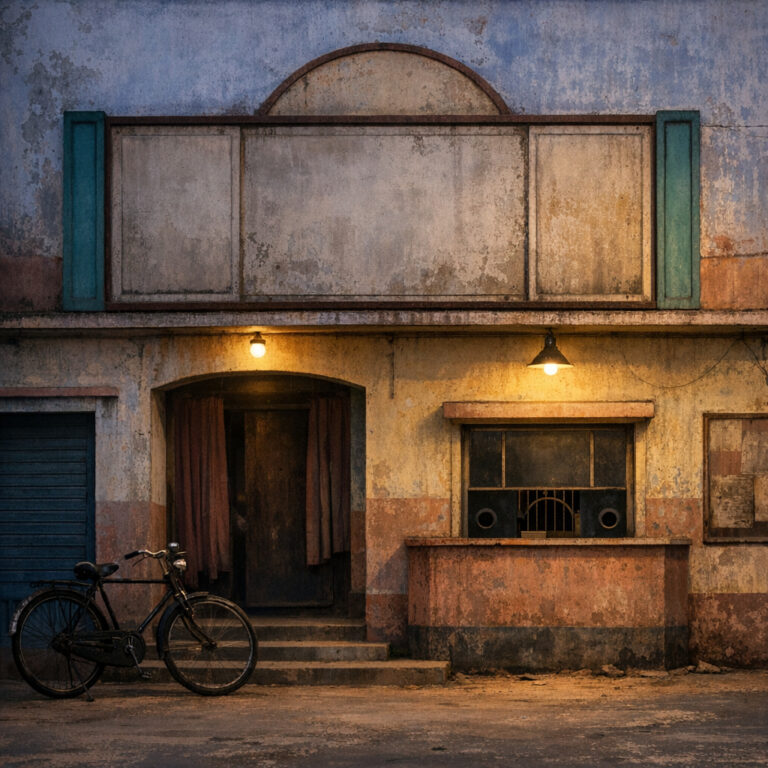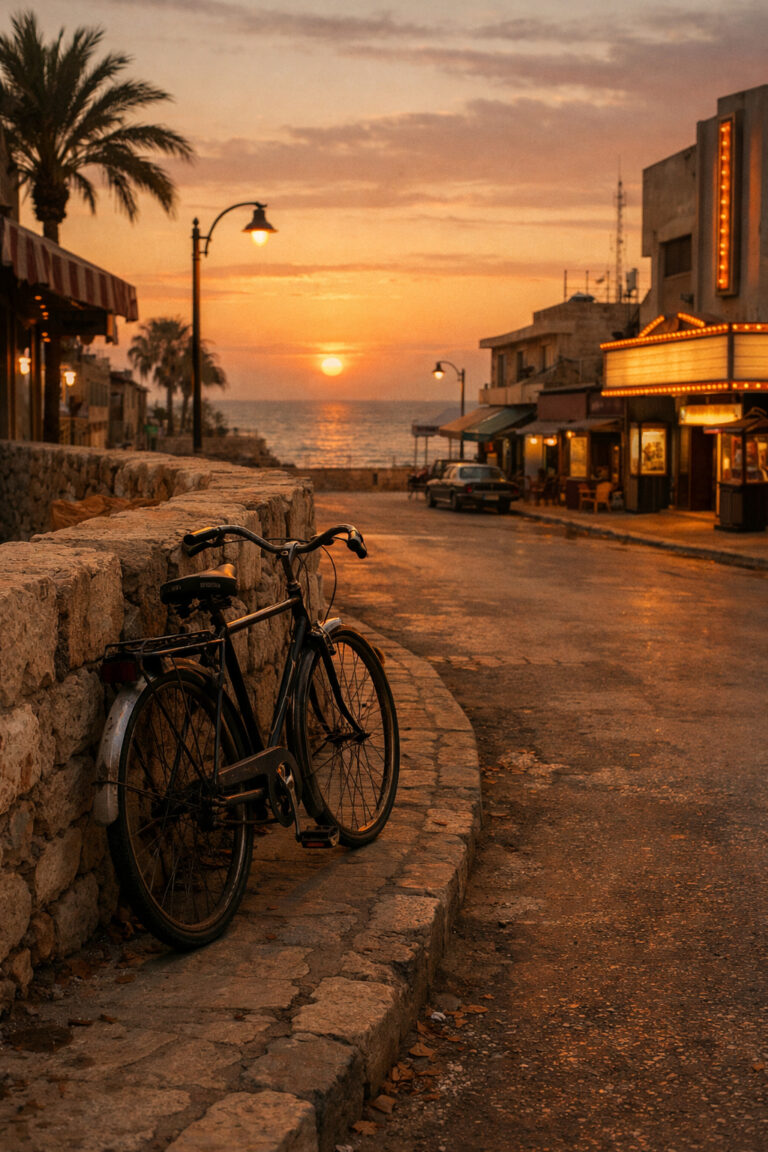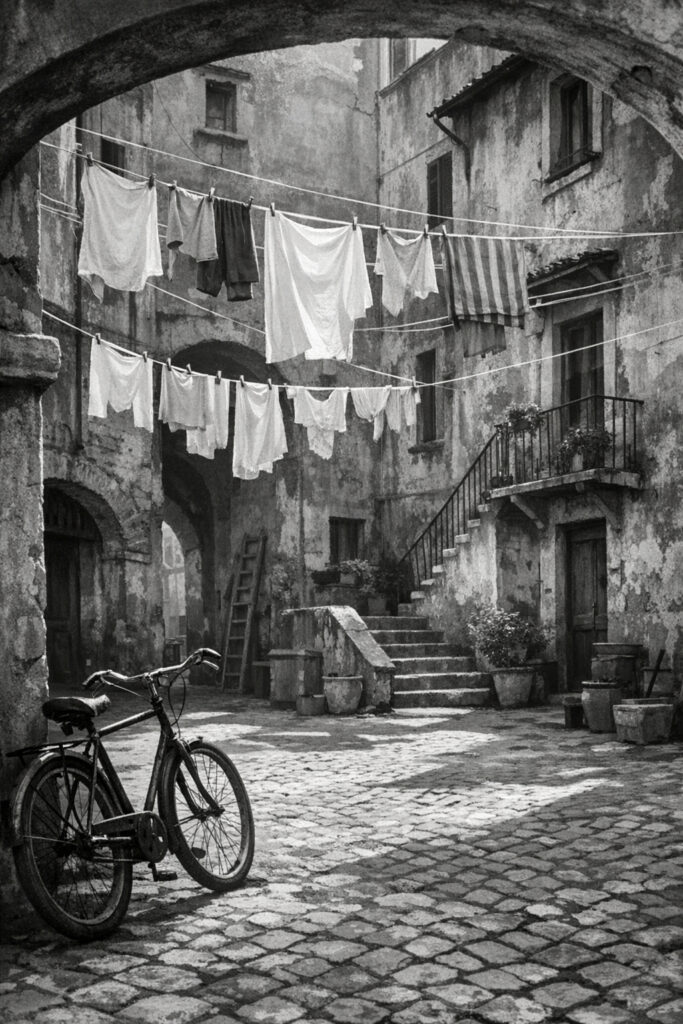
In 1948 Vittorio De Sica went looking for the lead actor of his next film and found him in a factory. Lamberto Maggiorani was a worker with no acting experience, and De Sica cast him as a man whose bicycle, the thing he needs to keep a new job, is stolen on his first day. The film was Bicycle Thieves, and that casting decision sums up Italian neorealism better than any manifesto: real streets, real faces, and a story so small it could happen to anyone in the audience.
What Italian neorealism was
Italian neorealism is the name given to a group of films made in Italy from roughly 1943 to the early 1950s. They shared a set of habits rather than a formal program. Directors shot on location in cities and villages instead of on studio sets. They mixed professional actors with ordinary people. They told stories about working-class and poor characters dealing with unemployment, housing, hunger and the aftermath of war. And they favored plain storytelling over spectacle, often leaving endings unresolved.
Some of this was principle and some was necessity. The war had left Italy’s film industry in ruins. Cinecittà, the large studio complex outside Rome, had been damaged and for a time was used to house displaced people. Film stock was scarce and money was scarcer. Shooting in the street was cheaper than building a set, and a non-professional actor cost less than a star.
The roots: before the war ended
The style did not appear from nowhere in 1945. Critics and young filmmakers in Rome had been arguing for a more truthful Italian cinema during the late Fascist years, partly in reaction to the polished studio comedies of the period, sometimes called “white telephone” films after their glamorous sets.
Luchino Visconti’s Ossessione (1943) is usually named as the forerunner. It is an uncredited adaptation of James M. Cain’s novel The Postman Always Rings Twice, moved to the flat landscapes of the Po valley, and its sweaty roadside atmosphere was unlike anything in mainstream Italian film of the time. The word neorealism itself is often said to have been first applied around this film, though accounts differ on exactly who coined it.
The essential films
| Year | Film | Director | Why it matters |
|---|---|---|---|
| 1943 | Ossessione | Luchino Visconti | The forerunner: a crime story in a real, impoverished landscape |
| 1945 | Rome, Open City | Roberto Rossellini | The breakthrough, made in a city barely out of occupation |
| 1946 | Shoeshine | Vittorio De Sica | Two street boys caught in the postwar black market |
| 1946 | Paisan | Roberto Rossellini | Six episodes following the Allied advance up Italy |
| 1948 | Germany, Year Zero | Roberto Rossellini | A boy in the ruins of Berlin |
| 1948 | La Terra Trema | Luchino Visconti | Sicilian fishermen playing versions of themselves |
| 1948 | Bicycle Thieves | Vittorio De Sica | The movement’s most famous and most loved film |
| 1949 | Bitter Rice | Giuseppe De Santis | Neorealism meets melodrama in the rice fields |
| 1952 | Umberto D. | Vittorio De Sica | An elderly pensioner and his dog; often called the movement’s last masterpiece |
Rome, Open City (1945)
Roberto Rossellini began shooting Rome, Open City within months of the city’s liberation in 1944. The story follows a resistance leader, a priest and a working-class widow during the German occupation of Rome. Anna Magnani’s performance as Pina and Aldo Fabrizi’s as the priest made both actors famous abroad, and a young Federico Fellini was among the writers. The film shared the top prize at the first postwar Cannes festival in 1946 and was a hit in the United States, which put Italian cinema on the international map almost overnight.
Bicycle Thieves (1948)
De Sica and his regular writer Cesare Zavattini adapted a novel by Luigi Bartolini, though they changed it substantially. Antonio Ricci, played by Maggiorani, needs a bicycle for a job pasting up posters. When it is stolen, he and his young son Bruno, played by Enzo Staiola, search Rome for it. That is the whole plot, and it is enough. The film received an honorary Academy Award as the outstanding foreign language film of its year, before the competitive foreign-language category existed. It remains a fixture of critics’ polls and the easiest place to start if you are new to the movement.
Umberto D. (1952)
De Sica’s last major neorealist film follows a retired civil servant, played by the non-professional Carlo Battisti, a university lecturer, as he struggles to pay his rent and keep his dignity, with only his dog for company. It was not a commercial success in Italy, but its reputation has grown steadily, and many viewers now rank it above Bicycle Thieves.
La Terra Trema (1948)
Visconti took the idea of non-professional casting further than anyone. He shot in the Sicilian fishing village of Aci Trezza, loosely adapting Giovanni Verga’s nineteenth-century novel I Malavoglia, and cast local fishermen and their families, who speak in Sicilian dialect so dense that the film carries an Italian narration. It is long and demanding, but its images of boats, nets and the sea have rarely been matched.
The people behind the movement
- Roberto Rossellini made the war trilogy of Rome, Open City, Paisan and Germany, Year Zero, then moved toward more spiritual and personal films in the 1950s, several with Ingrid Bergman.
- Vittorio De Sica was already a popular screen actor and matinee idol before he directed his neorealist films, and he continued acting throughout his career.
- Cesare Zavattini, De Sica’s screenwriter, was the movement’s leading theorist. He argued that cinema should follow ordinary people through ordinary days and find drama in the details.
- Luchino Visconti, from an aristocratic Milanese family, made Ossessione and La Terra Trema before turning to lavish historical films such as Senso (1954) and The Leopard (1963).
- Giuseppe De Santis brought popular genre energy to the movement with Bitter Rice, starring Silvana Mangano.
How to recognize a neorealist film
If you are watching an Italian film from the late 1940s and wondering whether it counts, look for these signs:
- Location shooting. Real streets, apartment blocks, markets and fields, often with passersby in the frame.
- Non-professional performers. Usually in key roles, sometimes alongside trained actors.
- Everyday stakes. A job, a bicycle, a room to rent, a meal. The drama is economic and personal.
- Children as witnesses. Boys appear again and again, from Shoeshine to Germany, Year Zero to Bruno in Bicycle Thieves.
- Open endings. Problems are rarely solved. The characters walk off into the crowd and life goes on.
One practical detail surprises many first-time viewers. Much of the dialogue in these films was dubbed in postproduction, a standard practice in Italian cinema of the era. The “realism” was in the faces and places, not necessarily in the soundtrack.
Why it faded
By the early 1950s the movement was losing momentum. Italy’s economy was recovering, audiences wanted entertainment, and the films were often more admired abroad than at home. The directors themselves moved on. Rossellini turned inward, Visconti turned to history and opera, and De Sica alternated between serious work and popular comedies. Younger directors such as Federico Fellini and Michelangelo Antonioni came out of the neorealist world but took it in very different directions, Fellini toward memory and fantasy, Antonioni toward alienation and modern architecture.
Why Italian neorealism still matters
It is hard to overstate how far the influence spread. Satyajit Ray decided to become a filmmaker partly after seeing Bicycle Thieves in London, and his Pather Panchali (1955) carries its spirit into rural Bengal. The French New Wave critics admired Rossellini enormously, and the young directors borrowed his freedom of form, as we explain in our guide to the French New Wave. Later realist traditions, from British social dramas to Iranian cinema of the 1990s, are regularly described as heirs of neorealism.
The deeper legacy is an idea: that an ordinary person’s ordinary problem is worth a feature film. That idea feels obvious now, which is a measure of how completely the Italians won the argument.
Where to start watching
Begin with Bicycle Thieves, then Rome, Open City, then Umberto D. If those three click, move on to Paisan and La Terra Trema. Most of the key titles have been restored and are distributed through licensed services, and they turn up regularly at repertory screenings. For the wider picture of how neorealism fits among other national movements, see our beginner’s map of world cinema classics.
Where to go next
Travel east to another postwar flowering in the golden age of Japanese cinema, or see more picks in our best old movies guide.