In September 1951 the jury at the Venice Film Festival gave its top prize, the Golden Lion, to a film few Western viewers had heard of. Rashomon, directed by Akira Kurosawa, told one crime four ways and refused to say which version was true. Its own studio had reportedly not thought it worth submitting. Within a few years, Western audiences discovered that Japan had been making extraordinary films for decades, and the 1950s became the decade when Japanese classic movies entered the world canon for good.
Why the 1950s?
Japan’s film industry was not new. It had been one of the largest in the world since the silent era, with a powerful studio system and directors who had already made major work in the 1930s. What changed after the war was visibility and circumstance. The Allied occupation, which ended in 1952, had restricted feudal and militarist subjects, and as those limits lifted, studios returned to historical dramas with new freedom. At the same time, international festivals were hungry for discoveries, and Venice and Cannes rewarded Japanese films repeatedly through the decade.
The studios mattered as much as the directors. Shochiku, Toho and Daiei each had house styles and long-term contracts with directors, writers and stars. Ozu spent nearly his whole career at Shochiku. Kurosawa’s greatest successes of the 1950s were made at Toho. Daiei produced Rashomon, Mizoguchi’s Ugetsu and Teinosuke Kinugasa’s color period drama Gate of Hell (1953), which won the top prize at Cannes in 1954 and an honorary Academy Award. Color was still rare in Japanese features at the time, and Gate of Hell was admired abroad as much for its costumes and palette as for its story.
Before the golden age
None of the three masters arrived from nowhere in 1950. Ozu had been directing since 1927, and his silent comedy I Was Born, But… (1932), about two boys who discover that their father has to flatter his boss, already shows his eye for family hierarchy and gentle humor. Mizoguchi made Osaka Elegy and Sisters of the Gion in 1936, two hard-edged portraits of women that many critics see as the real start of his mature work. Kurosawa, the youngest, made his debut with the judo drama Sanshiro Sugata in 1943, during the war.
Japanese silent cinema also had its own tradition of live narrators, the benshi, who stood beside the screen and voiced and explained the action. Their popularity is one reason sound arrived in Japan later than in Hollywood, and Ozu kept making silent films well into the 1930s; his first full sound feature, The Only Son, did not arrive until 1936. Those early films are worth seeking out later, once the 1950s work has hooked you, because they show how long he spent refining a style that looks effortless on screen. If you enjoy that era, our guide to silent movies and where to start is a good companion.
The three masters
Akira Kurosawa
Kurosawa is the director most Western viewers meet first, and for good reason. His films move. He used multiple cameras, telephoto lenses, weather and fast cutting to give period stories the energy of modern action cinema. His regular star, Toshiro Mifune, brought a coiled, unpredictable physicality, while Takashi Shimura often played the steady, older center of the story.
Seven Samurai (1954), about villagers who hire masterless samurai to defend them from bandits, is the usual masterpiece pick, and it was remade in Hollywood as The Magnificent Seven (1960). But Kurosawa’s range was wide. Ikiru (1952) follows a dying bureaucrat, played by Shimura, trying to do one meaningful thing, and Throne of Blood (1957) relocates Macbeth to feudal Japan. George Lucas has said that The Hidden Fortress (1958) was one of the influences on Star Wars.
Yasujiro Ozu
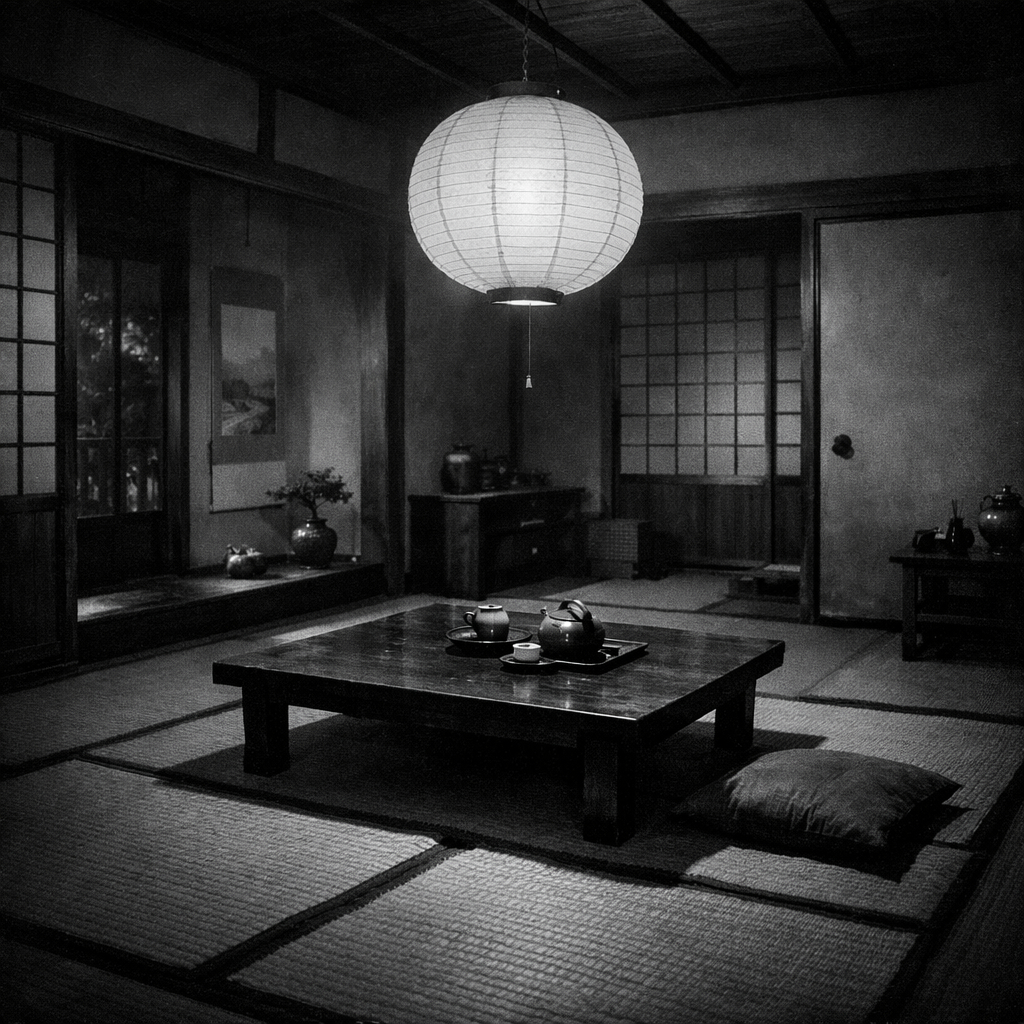
If Kurosawa is motion, Ozu is stillness. His mature films are quiet family dramas, usually about parents and grown children drifting apart, a daughter’s marriage, or a parent growing old. He placed the camera low, near the eye level of someone kneeling on a tatami mat, rarely moved it, and cut between scenes with short shots of empty rooms, railway lines or laundry. Those transitional images, often called pillow shots by critics, give his films their distinctive rhythm.
Tokyo Story (1953), in which an elderly couple visit their busy adult children in the city, is regularly named among the greatest films ever made; it topped the directors’ poll in the 2012 Sight and Sound survey. Late Spring (1949), with Setsuko Hara as a daughter reluctant to marry and leave her widowed father, played by Chishu Ryu, is just as fine. Ozu died in 1963, on his sixtieth birthday.
Kenji Mizoguchi
Mizoguchi was the oldest of the three and had been directing since the 1920s. He is known for long, flowing takes, often from a slight distance, that let a whole scene unfold without cutting, and for a lifelong focus on women suffering under social and economic systems they cannot escape. Kinuyo Tanaka, one of the great actresses of Japanese film, starred in several of his key works.
His run in the early 1950s is astonishing. The Life of Oharu (1952), Ugetsu (1953) and Sansho the Bailiff (1954) all won prizes at Venice. Ugetsu, a ghost story set during civil war in the sixteenth century, is the most approachable entry point, with images on a misty lake that are among the most beautiful in cinema. Mizoguchi died in 1956.
Beyond the big three
Concentrating on three names leaves out a great deal. Mikio Naruse made understated dramas about women’s lives, and his Floating Clouds (1955), starring Hideko Takamine, is now considered one of the great films of the decade. Keisuke Kinoshita’s Twenty-Four Eyes (1954) was a huge popular success in Japan. Kon Ichikawa’s The Burmese Harp (1956) addressed the war’s aftermath. And the same decade saw Ishiro Honda’s Godzilla (1954) at Toho, which launched an entirely different tradition of Japanese popular cinema.
Japanese classic movies to start with
| Year | Film | Director | Studio | Why start here |
|---|---|---|---|---|
| 1949 | Late Spring | Yasujiro Ozu | Shochiku | The purest introduction to Ozu’s style |
| 1950 | Rashomon | Akira Kurosawa | Daiei | The film that opened the door to the West |
| 1952 | Ikiru | Akira Kurosawa | Toho | A modern-day drama that shows Kurosawa’s depth |
| 1953 | Tokyo Story | Yasujiro Ozu | Shochiku | A family drama that grows on you for years |
| 1953 | Ugetsu | Kenji Mizoguchi | Daiei | A ghost story of rare visual beauty |
| 1954 | Seven Samurai | Akira Kurosawa | Toho | The template for the modern action ensemble |
| 1954 | Sansho the Bailiff | Kenji Mizoguchi | Daiei | Mizoguchi at his most devastating |
| 1955 | Floating Clouds | Mikio Naruse | Toho | The best-kept secret of the decade |
A suggested viewing order
I usually suggest beginning with Kurosawa, because his storytelling is closest to what most viewers already know. Watch Seven Samurai on a free afternoon; it runs well over three hours, but it never feels like it. Then try Rashomon, which is short and puzzle-like.
Next, slow down with Tokyo Story. Give it your full attention and resist checking your phone. Ozu’s films work by accumulation, and the emotional payoff comes late. If it connects, go straight to Late Spring.
Finish with Ugetsu and Sansho the Bailiff. By then you will have a feel for three completely different ways of making a film, all from the same country in the same decade, and you will see why critics still argue about which of the three was the greatest.
The legacy
The influence of this period runs in every direction. Kurosawa’s samurai films fed directly into the American and Italian western: Yojimbo (1961) was the basis for Sergio Leone’s A Fistful of Dollars (1964). Ozu’s restraint has inspired generations of filmmakers who prefer observation to plot, and his name comes up constantly when directors discuss their influences. Mizoguchi’s long takes were championed by the French critics who later made the New Wave; you can read more about them in our guide to the French New Wave.
The golden age also belongs to a wider postwar story. Japan and Italy, both rebuilding after defeat, produced their most celebrated cinema in the same few years, and it is worth comparing these films with Italian neorealism to see how differently two national cinemas responded to the same moment.
Most of these films have been carefully restored, and they appear regularly in repertory programs and through licensed services in many countries.
Where to go next
Place Japan among the other great national movements in our beginner’s map of world cinema classics, or explore more picks in classic movies to watch.